
Affiliate Disclosure
This article may contain affiliate links. If you click on a link and complete a qualifying action or purchase, we may earn a commission at no additional cost to you. This helps support our website and allows us to continue providing valuable content. We only recommend services that we believe offer value to our readers.
click here to visit and get value-
Buying or selling a used car has become much easier than it was a few years ago, but finding the right price for a used car is still one of the biggest challenges. A buyer wants a reliable vehicle without paying more than necessary, while a seller wants to get a fair resale value without spending weeks dealing with calls, negotiations and uncertain buyers. This is where online used-car platforms, valuation tools and digital inspection services have changed the experience. Instead of depending entirely on a local dealer or a single newspaper advertisement, buyers and sellers can now research prices, compare vehicles, check market demand and begin the transaction online.
The Indian pre-owned car market is also becoming increasingly important. A 2026 used-car study based on more than 11,000 vehicle transactions across nine cities estimated that the used-car market is around 1.39 times the size of the new-car market and is growing at approximately 11–13% annually. The organized segment is growing even faster, showing how quickly consumers are moving toward structured online buying and selling experiences. (Autocar) This change creates a huge opportunity for buyers who want better value and sellers who want a simpler way to understand their car’s market worth.
Why More People Are Choosing Used Cars
A new car can be an exciting purchase, but depreciation begins almost immediately. For buyers who want better equipment, more space or a higher segment of vehicle without paying the full new-car price, the used market can provide an attractive alternative. A carefully selected three- to five-year-old vehicle may offer many of the features buyers want while costing substantially less than an equivalent new vehicle. The key, however, is not simply finding the cheapest second-hand car available. The real objective is to find a vehicle where price, condition, ownership history, mileage, maintenance and resale potential make sense together.
Today’s used-car buyers are also more informed than before. They can compare dozens of listings, check prices across cities, research ownership costs and use online valuation tools before negotiating. Current marketplace search structures show strong emphasis on filters for budget, body type, location, ownership, fuel type, transmission and kilometres driven. (CarDekho) That means a buyer no longer has to walk into a dealership without knowing anything about the market. A few minutes of research can provide a useful reference point before viewing a vehicle.
Understanding the Used Car Market
The used-car market is not a single market with one universal price. The value of a vehicle can vary significantly depending on location, age, mileage, condition, ownership history and demand. The same vehicle may have different asking prices in different cities because supply and buyer preferences are not identical everywhere. This is why simply searching for a vehicle online and looking at the cheapest or most expensive listing can produce a misleading picture.
A better approach is to look for a market range rather than one magical number. Current online valuation tools increasingly use factors such as vehicle age, mileage, fuel type, transmission, features, location and market data to calculate resale values. Some platforms say they analyze hundreds of thousands of listings or transactions to establish their estimates. (CarWale) This makes online valuation useful as a starting point, although buyers and sellers should still understand that an online estimate is not necessarily the final transaction price.
What Is a Used Car Valuation?
A used car valuation is an estimate of what a vehicle could reasonably be worth in the current market. Instead of calculating depreciation using a simple percentage, modern valuation systems can consider multiple variables simultaneously. These may include the vehicle’s manufacturing year, variant, kilometres driven, ownership count, city, fuel type, transmission, features, condition and current market demand.
For sellers, a valuation answers a very important question: “How much is my car actually worth today?” For buyers, the same information can answer a different question: “Is this seller asking a fair price?” That makes valuation one of the most valuable tools in the used-car buying and selling process.
How Online Car Valuation Works
Most online valuation tools begin with basic vehicle information. You may be asked for a registration number, make and model, manufacturing year, variant, city, kilometres driven and ownership details. Some tools can automatically retrieve basic vehicle information after entering the registration number, while others allow the information to be entered manually.
The system then compares the vehicle against available market information to generate an estimated price. Current valuation tools in India describe using real-time market information, machine-learning models, listing data and other vehicle characteristics to produce estimates. (CarWale) The result should be viewed as a pricing benchmark, not an unconditional promise. The physical condition of the vehicle can still change the final value considerably.
What Determines the Price of a Used Car?
Many sellers make the mistake of thinking that their vehicle’s original purchase price determines today’s resale value. It does not. The used-car market essentially asks what another buyer is willing to pay for that particular vehicle today.
Several factors work together to determine the final price.
Age and Depreciation
Age is one of the most obvious factors. Generally, newer used vehicles command higher prices than older examples of the same vehicle, assuming similar condition. However, depreciation does not happen at exactly the same rate every year. The first few years can see substantial value reduction, while later depreciation may be influenced more heavily by condition, demand and maintenance.
Mileage
Mileage provides an indication of how extensively the vehicle has been used. A vehicle with very high kilometres may require more careful inspection, while a low-mileage example can attract stronger demand if the mileage is genuine and supported by service records. Mileage alone, however, should never determine the buying decision.
A well-maintained vehicle with higher mileage can sometimes be a better purchase than a poorly maintained low-mileage vehicle. This is why buyers should consider mileage together with service history, mechanical condition and ownership records.
Condition
Condition can have a major effect on resale value. Exterior damage, repainting, dents, tyre condition, interior wear, engine performance, electrical systems and previous accident repairs can all influence the final assessment. Professional inspection services increasingly use detailed checklists to evaluate vehicles before determining a final offer. One major online seller, for example, currently advertises a 300-point inspection for vehicles being sold through its platform. (Cars24)
Ownership History
A first-owner vehicle with a clean history may be easier to sell than a similar vehicle that has changed hands several times. Buyers often associate fewer owners with clearer history and potentially better maintenance, although ownership count alone does not guarantee quality.
Market Demand
Demand can be just as important as depreciation. Vehicles that are practical, economical, easy to maintain and widely supported may attract more buyers in the used market. Strong demand can help support resale prices, while vehicles with limited demand may require more competitive pricing.
How to Find Used Cars for Sale Online
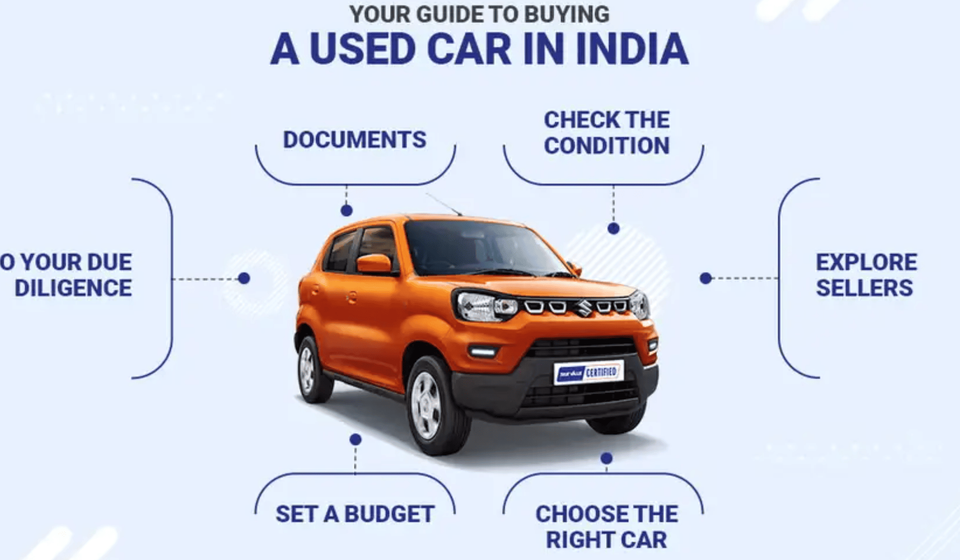
Searching for used cars for sale online is relatively simple, but finding a genuinely good deal requires more than sorting listings from lowest to highest price. Start by deciding your budget, preferred body type, expected annual mileage and primary use. Someone buying a city commuter will have very different priorities from someone looking for a family vehicle for long-distance travel.
Once you know what you need, compare multiple listings with similar age and mileage. Look for patterns rather than individual prices. If ten comparable vehicles are listed within a relatively narrow range and one vehicle is dramatically cheaper, there may be a reason. It could be an urgent sale, but it could also involve accident history, ownership issues, mechanical problems or incomplete documentation.
Best Used Cars by Budget
Budget-based searches are among the strongest content opportunities in the used-car market because buyers frequently begin with a number rather than a specific vehicle. Search behaviour and current marketplace structures show strong emphasis on categories such as vehicles under ₹3 lakh, ₹5 lakh, ₹10 lakh and higher price ranges. (VahanBazaar.in)
A budget of ₹3 lakh may focus on older hatchbacks and compact vehicles. Around ₹5 lakh, buyers can often explore newer small cars, older sedans and some compact SUVs depending on location and condition. Moving toward ₹10 lakh opens a wider range of newer vehicles, higher trims and larger body styles. The exact options will change with the market, but budget-based searching is an effective way to narrow a large inventory into manageable choices.
Why ₹5 Lakh Is an Important Used-Car Search Category
The phrase used cars under ₹5 lakh has strong commercial intent because it combines a specific budget with a clear purchase objective. Buyers searching this way are usually closer to making a decision than someone searching broadly for “cars.” Current 2026 content across the used-car sector repeatedly focuses on the ₹3–5 lakh range as an important segment. (VahanBazaar.in)
At this price level, buyers should pay particular attention to maintenance history. Saving ₹50,000 on the purchase price does not necessarily mean saving money overall if the vehicle immediately requires major repairs. A slightly more expensive car with complete service records, better tyres, cleaner mechanical condition and fewer ownership concerns can represent a much better deal.
How to Sell Your Car Online
For sellers, the first step should be understanding the vehicle’s current market value. Searching “sell my car” or “sell car online” without first checking valuation can leave you vulnerable to low offers because you may not know what your vehicle is actually worth.
An online selling process typically follows a straightforward sequence:
- Enter the vehicle details.
- Receive an initial valuation.
- Schedule an inspection.
- Complete vehicle and document verification.
- Receive a final offer.
- Accept the offer if it meets your expectations.
- Complete payment and ownership-transfer formalities.
Current online selling services commonly advertise instant estimates, doorstep evaluations, professional inspections, documentation support and fast payment as major parts of the digital selling experience. (Cars24)
Online Valuation vs Final Selling Price
This distinction is extremely important for anyone searching for a car valuation online. An online estimate is generally calculated using information entered by the seller and market data available to the valuation system. The final offer can change once the vehicle is physically inspected.
For example, an online estimate may assume that the car is in reasonable condition. During inspection, the evaluator could discover accident repairs, worn tyres, mechanical issues or other factors that affect its value. Conversely, a well-maintained vehicle with strong documentation may perform better during physical assessment than a basic online estimate suggests.
Current valuation guidance from major automotive platforms explicitly distinguishes between an initial online estimate and the final price after inspection. (The Economic Times)
How to Prepare Your Car Before Selling
You do not need to spend a fortune preparing a car for sale. Start with simple improvements that make the vehicle easier to evaluate. Clean the interior and exterior, remove personal belongings, organize service records and make sure all relevant documents are available.
If the car has minor cosmetic problems, evaluate whether repairing them makes financial sense before spending money. A small professional cleaning may be worthwhile, while an expensive repaint may not necessarily return the same amount through a higher selling price. The objective is not to make the car look artificially perfect; it is to present the vehicle honestly and make its actual condition easy to assess.
Documents You Need When Selling a Used Car
Paperwork is one of the most important parts of a used-car transaction. The exact requirements can vary depending on the vehicle and transaction, but sellers should generally have ownership documents, registration information, insurance details, pollution documentation where applicable and valid identity/address proof ready.
If the vehicle is financed, the seller may also need documentation related to loan closure or a bank NOC. Current selling platforms specifically highlight the importance of the original registration certificate, insurance, PUC and financing-related documents where applicable. (Cars24)
Keeping these documents ready before the valuation can reduce delays later. It also gives potential buyers or the purchasing platform greater confidence that the transaction can be completed without administrative surprises.
What Is the Difference Between Buying From a Dealer and a Private Seller?
Buying from a private seller can sometimes produce attractive prices, but it also transfers more responsibility to the buyer. You may need to independently verify the vehicle, negotiate the price, inspect the documents, check ownership history and manage the transfer process.
An organized online marketplace may provide additional services such as vehicle inspection, financing options, warranty packages, return policies or documentation support. Current market analysis identifies online platforms, local dealers and classifieds as three major routes for buying used cars, with each offering a different balance of convenience, price and buyer protection. (The Economic Times)
Neither route is automatically perfect. The right choice depends on whether you prioritize maximum negotiation flexibility, convenience, inspection support, documentation assistance or post-sale protection.
Used Cars Near Me: Why Location Matters
The keyword used cars near me is valuable because used-car pricing is highly local. A vehicle that is common in one city may be harder to find in another. Local demand, supply, road conditions, buyer preferences and dealer inventory can all affect pricing.
When comparing prices, use the same city or nearby market whenever possible. Comparing a vehicle from a major metropolitan market with one from a smaller city may produce misleading results. Local listings can also help you estimate how much competition exists for the type of vehicle you want to buy or sell.
This is why city-specific searches such as used cars in Delhi, used cars in Mumbai, used cars in Bangalore, used cars in Pune, used cars in Lucknow and other locations can form valuable SEO landing pages when they provide genuinely useful local information rather than simply repeating the same content.
How to Inspect a Used Car Before Buying
Never purchase a used car solely because the online listing looks attractive. Photographs can hide mechanical issues, accident repairs, tyre wear and interior damage. A proper inspection should cover the engine, transmission, suspension, brakes, tyres, electrical systems, air conditioning, body panels and underbody.
Take the car for a meaningful test drive rather than driving around the block for two minutes. Pay attention to unusual noises, steering behaviour, braking performance, clutch operation, transmission shifts, vibrations and warning lights. If you do not have the technical knowledge to evaluate the vehicle yourself, hiring an independent mechanic can be one of the smartest expenses in the entire buying process.
Used Car Inspection Checklist
Before paying, check:
- Registration and ownership documents.
- Service and maintenance history.
- Insurance validity and claim history.
- Vehicle identification details.
- Odometer consistency.
- Tyre condition and manufacturing dates.
- Engine and transmission behaviour.
- Brake and suspension performance.
- Air conditioning and electrical equipment.
- Accident or flood damage.
- Warning lights and dashboard alerts.
- Outstanding finance or other ownership issues.
A good inspection does not guarantee that a used car will never develop a problem, but it significantly reduces the chance of buying a vehicle without understanding its condition.
How to Know If a Used Car Price Is Fair
The best way to judge a used car price is to compare several similar vehicles. Match the year, variant, mileage, ownership count and city as closely as possible. Then compare the asking price against valuation tools and recent market listings.
Do not automatically choose the cheapest vehicle. Instead, ask why it is cheaper. A low price accompanied by poor maintenance, multiple owners or accident history may not represent a bargain. On the other hand, a slightly higher price supported by complete service records and excellent condition may offer better long-term value.
The goal is not to find the cheapest car. The goal is to find the best value for the money you are willing to spend.
Common Mistakes Buyers Make
One of the biggest mistakes is focusing too heavily on appearance. A polished exterior can make an old vehicle look attractive, but cosmetics do not tell you what is happening underneath. Another mistake is choosing a vehicle based entirely on low mileage. Mileage should be verified and considered alongside service history and overall condition.
Buyers should also avoid skipping paperwork verification. A car can look perfect and still create serious problems if ownership records, financing status or other documentation are unclear. Finally, never let urgency replace due diligence. If someone tells you that several buyers are waiting and you must pay immediately, slow down and verify everything.
Common Mistakes Sellers Make
Sellers often make the opposite mistake: setting an unrealistic price because they remember what they paid for the vehicle. Emotional attachment can also influence expectations. The market does not pay for memories; it pays for the vehicle’s current condition and perceived future value.
Another mistake is hiding defects. If an inspection later discovers undisclosed problems, the final offer can change and trust can disappear. A better strategy is to provide accurate information from the beginning and use a professional valuation to establish a realistic benchmark.
The Future of Online Used-Car Buying and Selling
The used-car market is becoming increasingly data-driven. Digital valuation tools, online inspections, financing technology, vehicle-history information and AI-assisted search are changing how consumers research cars. A 2025 Indian used-car market report found that automotive research has become digital-first and reported strong growth in AI-assisted automotive searches. (Team-BHP.com)
This means future buyers may spend less time simply searching for “cars” and more time asking highly specific questions: What is the fair price for this car? Which used car is best for my budget? What should I check before buying? How much will this car depreciate? Should I sell now or wait?
That shift creates an opportunity for websites that answer these questions clearly. Instead of creating hundreds of thin pages targeting the same phrase, publishers can build useful content around valuation, ownership costs, inspections, depreciation, city-specific pricing and buying decisions.
Best SEO Strategy for a Used-Car Website
For a website targeting this market, the strongest strategy is to build a topic cluster rather than depend on one keyword. The primary pillar could target used cars in India, supported by pages targeting used car valuation, sell car online, second hand cars, used car prices and buying guides.
Then create supporting pages around specific user problems. Examples include “How to Check Used Car Price,” “How to Sell a Used Car Online,” “Used Car Inspection Checklist,” “How Much Does a Car Depreciate After Five Years?” and “Documents Required to Sell a Used Car.” These pages capture different stages of the buyer journey rather than competing for exactly the same search.
City and budget pages can then expand the organic footprint. Useful combinations include used cars under ₹5 lakh, used cars under ₹10 lakh, used cars near me, first-owner used cars, automatic used cars, used SUVs, used hatchbacks and location-specific used-car searches.
Final Thoughts
The modern used-car journey is no longer limited to visiting local dealers and negotiating from scratch. Buyers can research inventory, compare prices, check valuations and investigate vehicles before making a decision. Sellers can obtain an online estimate, arrange an inspection and potentially complete much of the transaction digitally. This shift is being supported by a growing organized market and increasingly sophisticated valuation and inspection technology. (Autocar)
The most important lesson is simple: do not make a used-car decision based on price alone. For buyers, the right vehicle is one that combines a fair purchase price with good condition, reliable documentation, manageable maintenance and sensible resale potential. For sellers, the right strategy is to understand current market value, present the vehicle honestly and compare the final offer against realistic alternatives. When valuation, inspection and research are used together, buying or selling a used car becomes far less of a guessing game.
Frequently Asked Questions
1. What is the best way to find the price of a used car?
Start with an online used car valuation tool and compare the result with similar vehicles currently listed in your city. Match the vehicle’s age, mileage, variant, ownership and condition as closely as possible. This provides a more realistic price range than relying on a single advertisement.
2. Can I sell my car online without meeting multiple buyers?
Yes. Organized online selling services can allow sellers to begin with an online valuation and then proceed through inspection, offer, documentation and payment. The exact process varies by platform and location, but the goal is to reduce the need for repeated private negotiations.
3. Is a used car under ₹5 lakh a good option?
It can be, especially for buyers seeking affordable transportation, but condition matters more than the price tag alone. At this budget, compare maintenance history, mileage, ownership and mechanical condition carefully. A slightly more expensive well-maintained car can be better value than a cheaper vehicle requiring immediate repairs.
4. Should I trust an online car valuation?
An online valuation is useful as a starting estimate, not necessarily a guaranteed final price. Physical condition, accident history, service records and local demand can influence the final value. Current valuation services themselves distinguish between an initial digital estimate and a final offer after inspection. (The Economic Times)
5. What should I check before buying a second-hand car?
Check the registration and ownership documents, service history, mileage, insurance, accident history, tyres, engine, transmission, suspension, brakes, electrical systems and warning lights. Take a proper test drive and consider an independent inspection if you are not confident evaluating the mechanical condition yourself.
Affiliate Disclosure
This article may contain affiliate links. If you click on a link and complete a qualifying action or purchase, we may earn a commission at no additional cost to you. This helps support our website and allows us to continue providing valuable content. We only recommend services that we believe offer value to our readers.
click here to visit and get value-